 Nothing found for the request

Is Crypto Gambling? What Research Says in 2026
Sologe April 28, 2026
Share:


Quick Summary
Quick Summary: Crypto trading and gambling share behavioral similarities according to recent medical research, with studies from NIH showing links between cryptocurrency speculation and gambling behaviors. While crypto involves market analysis and can be approached strategically, the high volatility, speculative nature, and psychological patterns observed in traders often mirror gambling addiction. The FCA estimates around 2.3 million UK adults own cryptocurrencies, yet only 4.8% of US households use crypto in 2023.
The question “is crypto gambling” has sparked heated debate as cryptocurrency markets continue to attract millions of traders worldwide. On one hand, crypto evangelists argue it’s legitimate investing backed by blockchain technology. On the other, skeptics point to wild price swings and speculative behavior that looks disturbingly similar to a casino.
Here’s the thing though—recent medical research suggests both sides have valid points. The answer isn’t black and white.
Despite multiple warnings issued by the Financial Conduct Authority around the risks of investing in an unregulated market, the FCA estimates that around 2.3 million adults in the UK own cryptocurrencies. Meanwhile, in the United States, only 4.8% of all households owned or used crypto according to FDIC surveys in 2023.
But what does the science say about whether crypto behaves more like gambling or investing?
What Medical Research Reveals About Crypto Trading Behavior
Medical journals have published multiple studies examining the psychological patterns of cryptocurrency traders. The findings are eye-opening.
Research published in PMC found that greater engagement in cryptocurrency speculation may be associated with increased gambling behaviors. Even more concerning, both activities could be linked to underlying personality traits, impulsivity, and negative emotions.
A scoping review titled “Cryptocurrency Trading and Associated Mental Health Factors” notes that cryptocurrency trading seemingly mirrors the high-risk, high-reward nature of gambling and may cause significant psychological challenges to traders. The researchers examined how crypto speculation affects mental health as cryptocurrency trading becomes mainstream.
Another study on problematic cryptocurrency trading developed a scale to measure addictive behavior patterns. The researchers found that cryptocurrency trading is similar to problematic gambling behavior, with its high-risk factors and its methods of use. In this sense, it can become addictive.
Real talk: These aren’t opinion pieces. These are peer-reviewed medical studies published by NIH.
The Gambling-Investment Continuum
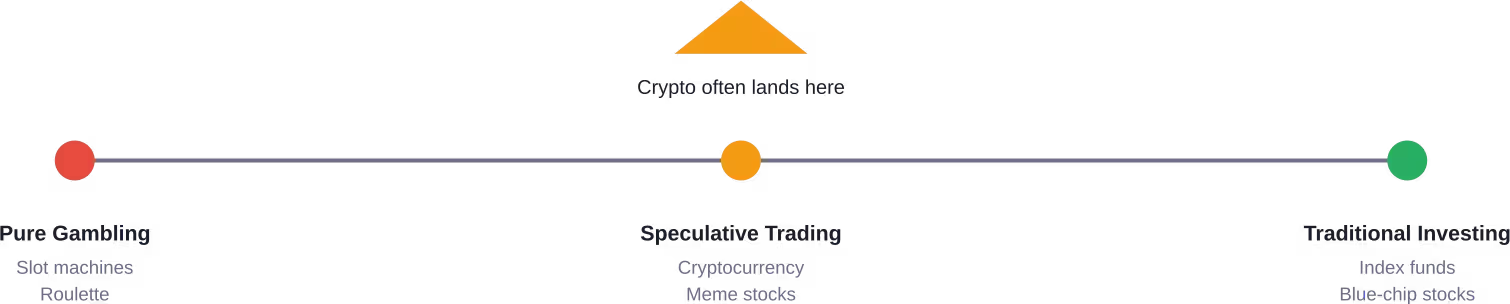
Research on cryptocurrency trading among healthcare professionals in Turkey revealed something critical: there’s a continuum between gambling and investing behaviors, with speculative investment instruments positioned in the middle.
Cryptocurrencies, being significantly more volatile than traditional investment tools, have increasingly been linked to gambling-like behavior patterns. In a study of healthcare professionals in Türkiye, 25.5% reported engaging in cryptocurrency trading.
So where exactly does crypto fall on this spectrum?
Key Differences: Crypto Trading vs. Pure Gambling
Look, it’s important to understand that crypto trading and gambling aren’t identical, even if they share behavioral patterns.
Gambling, defined as the activity of wagering something of a particular value with the possibility of obtaining something of a higher value, is commonplace in many parts of the world. The prevalence of gambling is high at 26% of the world population, amounting to approximately 1.6 billion people (Casino.org, 2021).
Aspect | Crypto Trading | Traditional Gambling |
|---|---|---|
Underlying Asset | Blockchain technology, network value | No asset, pure chance |
Analysis Possible | Technical and fundamental analysis available | Outcomes predetermined or random |
Time Horizon | Can hold long-term or short-term | Immediate resolution typically |
House Edge | No built-in house advantage | Casino always has mathematical edge |
Skill Component | Market knowledge can improve outcomes | Mostly luck-based |
That said, these distinctions matter less when someone approaches crypto with a gambler’s mindset.
When Crypto Trading Becomes Gambling
The lack of state control and anonymity provided by cryptocurrencies has spurred the launch of numerous other digital currencies, some of which have been scams targeting inexperienced users. The desire for high returns has led to several market bubbles and since 2009, cryptocurrency has seen fluctuating fortunes.
So when exactly does crypto cross the line from investing to gambling?
Research on stock and cryptocurrency trading during early phases of the COVID-19 pandemic examined this question. The narrative literature review found concerning patterns as people shifted gambling and trading behaviors during lockdowns.
Warning Signs of Gambling-Like Crypto Behavior
Medical researchers have identified specific patterns that indicate someone is treating crypto like gambling rather than investing:
- Trading based on emotions rather than analysis
- Chasing losses by investing more after market downturns
- Making impulsive decisions without research
- Trading with money needed for essential expenses
- Experiencing anxiety, stress, or obsessive thoughts about price movements
- Neglecting work, relationships, or responsibilities due to trading activity
- Using crypto trading as emotional escape or excitement
The problematic cryptocurrency trading scale developed by researchers measures these exact behaviors.
The Role of Crypto in Online Gambling
Many jurisdictions all over the world have stringent laws banning online gambling. However, gambling sites are beginning to leverage the complete lack of regulation when it comes to cryptocurrency to sidestep those bans.
Online crypto gambling is thriving as a result. It’s fun, exciting, and extremely easy—sometimes requiring no verification or identity checks.
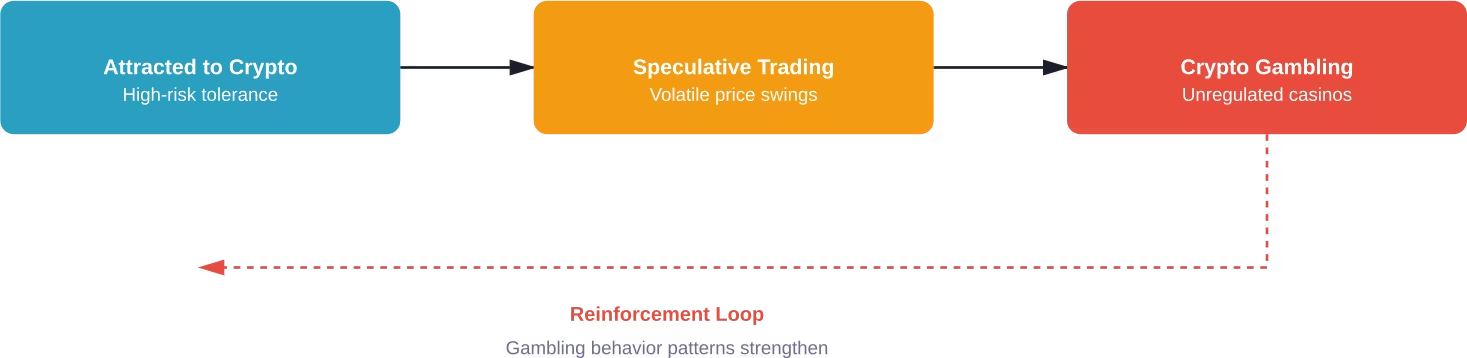
This creates a dangerous feedback loop. People attracted to crypto for its speculative nature may then use crypto for actual online gambling, which reinforces the psychological patterns linking both activities.
What Regulatory Authorities Say
The Securities and Exchange Commission and Commodity Futures Trading Commission have acknowledged that markets for securities and non-securities are increasingly converging. In a joint statement dated September 05, 2025, SEC Chairman Paul S. Atkins and CFTC Acting Chairman Caroline D. Pham emphasized new coordination between U.S. market regulators.
But regulation remains fragmented and unclear for most cryptocurrency activities.
Throughout most of American history, both cryptocurrency and the gaming industry have endured copious amounts of scrutiny and uncertainty from the public. The Federal Wire Act was historically used to combat gambling, and now regulators face similar challenges with crypto.
The Mental Health Connection
Now, this is where it gets interesting. Research on cryptocurrency trading among healthcare professionals found correlations between problematic crypto trading scores and gambling disorder screening test scores.
Spearman correlation coefficients were used to examine relationships between PCTS (Problematic Cryptocurrency Trading Scale) scores and APIRS/GDST (gambling disorder screening) scores. The statistical analysis revealed significant overlap.
The data were collected through TrueFeedBack BlackStar, a survey platform that provides survey participation by awarding participants with cryptocurrency. For research purposes, item analyses, t-tests, reliability analysis, and explanatory factor analysis were performed to validate the problematic cryptocurrency trading scale.
These findings suggest that greater engagement in cryptocurrency speculation may be associated with increased gambling behaviors and that both activities could be linked to underlying personality traits, impulsivity, and negative emotions.
Risk Factors for Problematic Crypto Trading
Medical research has identified several risk factors that predict problematic cryptocurrency trading behavior:
- History of gambling problems or addiction
- High impulsivity scores on psychological assessments
- Using trading as emotional regulation
- Social isolation or lack of support systems
- Previous substance use issues
- Depression or anxiety disorders
Different Approaches: Strategic vs. Speculative
Sound familiar? The way someone approaches crypto determines whether it resembles investing or gambling.
Strategic Approach | Speculative/Gambling Approach |
|---|---|
Research technology and use cases | Buy based on hype or FOMO |
Diversify across multiple assets | All-in on single coins |
Invest only disposable income | Risk essential funds |
Long-term holding strategy | Constant day trading |
Accept losses as part of process | Chase losses desperately |
Emotionally detached decisions | Panic buying and selling |
The short answer? Crypto can be either investing or gambling depending entirely on approach and mindset.
Find Verified Crypto Gambling Partners Ready to Work

Crypto gambling brings in new infrastructure – wallets, payments, compliance layers – but the real bottleneck is still finding companies that actually fit your setup. Sologe works as a B2B marketplace where operators and teams can explore suppliers, review offerings, and connect without jumping between tools or waiting for industry events.
Get Matched With the Right Suppliers Now
Sologe helps you turn research into actual business conversations:
- Find vendors already working with crypto-focused iGaming setups
- Review solutions across payments, platforms, and supporting services
- Keep your company visible to others looking for partnerships
- Reach out to suppliers directly without third parties
If you’re working with crypto gambling products, contact Sologe to connect with companies that match your requirements and discuss your setup.
FAQ
Is cryptocurrency trading considered gambling?
Cryptocurrency trading is not legally classified as gambling in most jurisdictions, but it can resemble gambling behavior. It involves real assets and analysis, yet high volatility and impulsive trading can make it function similarly to gambling depending on how it’s approached.
What percentage of people own cryptocurrency?
Ownership varies by country. Surveys suggest a relatively small portion of the population holds crypto assets, with adoption rates generally in the single-digit percentage range in many developed countries.
Can crypto trading become addictive like gambling?
Yes. Research indicates that crypto trading can trigger similar psychological patterns to gambling, including impulsivity, risk-seeking behavior, and emotional decision-making.
How is crypto used in online gambling?
Cryptocurrency is often used for deposits and withdrawals on gambling platforms. Its global and decentralized nature can make it easier for some sites to operate across jurisdictions, sometimes with fewer restrictions.
What are warning signs of problematic crypto trading?
Signs include trading based on emotion, chasing losses, risking essential funds, constant monitoring of prices, and neglecting responsibilities. These behaviors mirror patterns seen in problem gambling.
Is there a difference between crypto investing and crypto gambling?
Yes. Investing typically involves research, long-term strategy, and risk management. Gambling-like behavior involves impulsive trades, short-term speculation, and decisions driven by hype rather than analysis.
What do regulators say about cryptocurrency?
Regulation is still evolving. Authorities continue working on frameworks to oversee digital assets, with different agencies focusing on aspects like securities, commodities, and consumer protection.
Conclusion
So is crypto gambling? The evidence suggests it exists on a spectrum.
Medical research clearly demonstrates behavioral overlaps between cryptocurrency speculation and gambling, particularly regarding impulsivity, risk-taking, and potential addiction. But crypto also differs from pure gambling through its underlying blockchain technology and potential for strategic analysis.
The critical factor isn’t the cryptocurrency itself—it’s how individuals approach it. Strategic investors who research projects, diversify holdings, and maintain emotional discipline treat crypto as investing. Those who chase pumps, panic sell, and risk essential funds are essentially gambling.
With approximately 2.3 million UK adults and 4.8% of US households involved in cryptocurrency in 2023, understanding this distinction matters for public health. The lack of regulation and anonymity crypto provides creates additional risks, particularly when combined with online gambling platforms.
If cryptocurrency trading is causing financial stress, relationship problems, or obsessive behavior patterns—seek professional help. The warning signs of problematic crypto trading mirror gambling addiction because the underlying psychological mechanisms often overlap.
Before investing in cryptocurrency, honestly assess motivations, risk tolerance, and approach. Make informed decisions based on research rather than hype, and never risk more than what can comfortably be lost.
Related Articles

September 30, 2026Is Sports Betting Legal in Brazil? The Full...

September 30, 2026Is Sports Betting Legal in Iran? The Real...