 Nothing found for the request
Sports Betting in Nigeria Statistics 2026: Data & Trends
Sologe June 8, 2026
Share:


Quick Summary
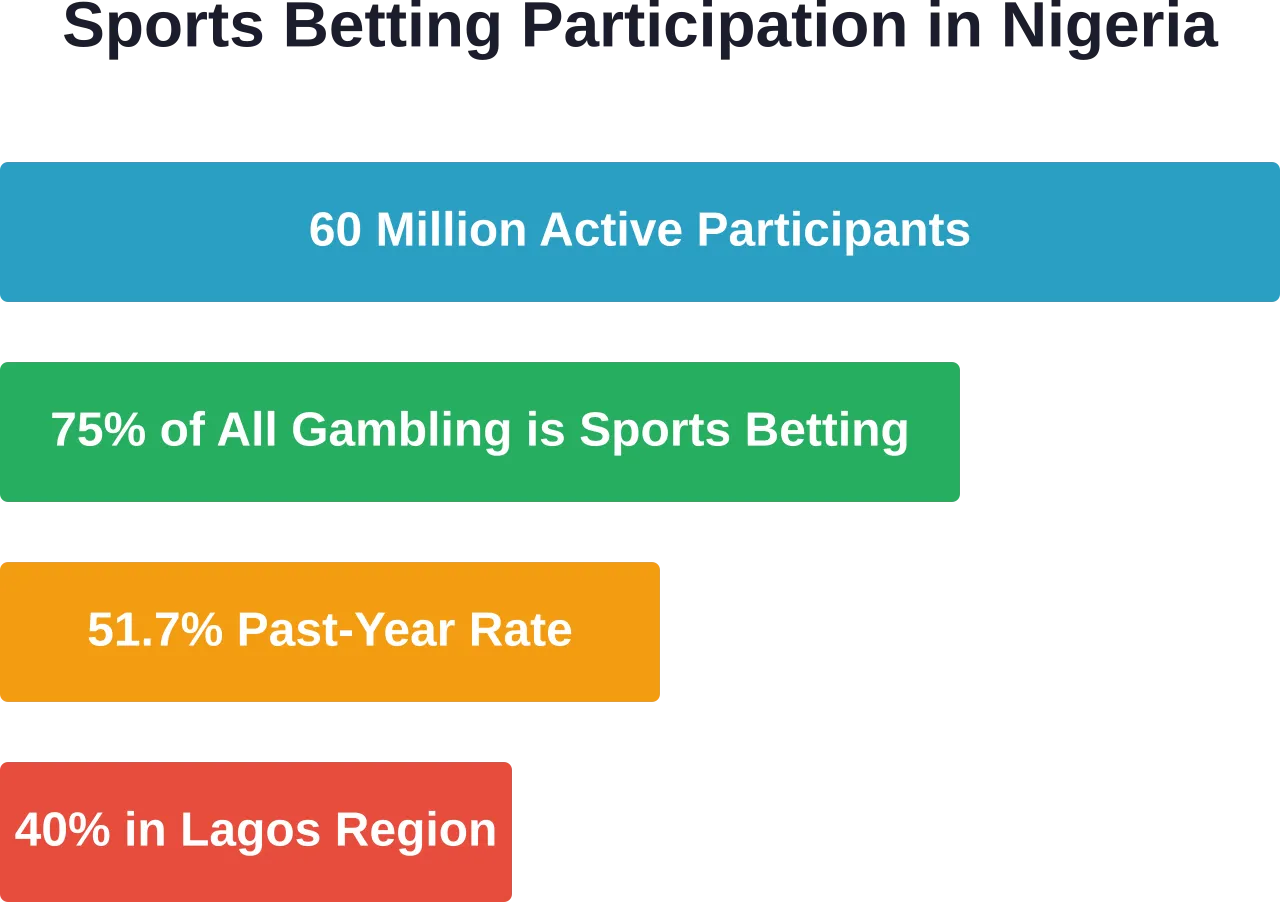
Quick Summary: Sports betting in Nigeria has exploded into a multibillion-naira industry, with over 60 million participants and 75% of all gambling activity focused on sports wagers. The market is dominated by young males using mobile platforms, with research indicating that online betting represents the dominant platform, with mobile devices accounting for the majority of bets placed. However, the surge has brought public health concerns, with problem gambling rates reaching 47.2% among active bettors and 64.2% reporting negative academic or personal impacts.
Nigeria’s sports betting landscape has transformed from a niche recreational activity into one of Africa’s largest gambling markets. With a population of 242 million and 60% under age 30, the country presents a perfect storm for sports betting growth: youthful demographics, widespread mobile internet access, and a passionate football culture.
But the statistics tell a story that goes beyond market opportunity. They reveal patterns of participation, risk, and social impact that demand attention from policymakers, health professionals, and the betting community itself.
Here’s what the data actually shows.
Market Size and Participation Rates
The Nigerian sports betting market has reached extraordinary scale. According to industry data, approximately 60 million Nigerians engage in sports betting activities, with projections suggesting growth toward 100 million participants in coming years.
Financial figures are equally impressive. Overall gambling spending in Nigeria reached approximately $975 million daily on online betting alone, according to officials from the National Lottery Trust Fund. Research from October 2022 found that 51.73% of the population had been involved in sports betting activities within the previous 12 months.
The National Lottery Regulatory Commission has issued numerous sports betting licenses, with application fees set at approximately ₦2,000,000 and substantive license fees ranging from ₦50–100 million depending on license type. Licensed operators face a 3% gross turnover tax levy, creating substantial government revenue from the sector.
Regional Concentration
Lagos territory leads the nation in sports betting participation, with 40% of all sports bettors concentrated in this single region. The urbanization and higher smartphone penetration in Lagos contribute to this concentration, though betting activity has spread rapidly to other states.
Research among Nigerian undergraduates found that 36.7% of 406 respondents had engaged in sports betting at some point, with 30.3% participating within the past year. These figures align closely with general population studies showing 36% of adults had gambled.
Demographics: Who's Betting?
The demographic profile of Nigerian sports bettors skews heavily male and young. Among survey respondents who had engaged in sports betting, 83.2% were male. This gender imbalance is consistent across multiple studies and reflects both cultural factors and marketing strategies that predominantly target men.
Age distribution centers on young adults. With 60% of Nigeria’s population under age 30, the betting industry finds its core market in university students, recent graduates, and young workers—groups often facing economic pressure and drawn to betting’s promise of quick income.
Among general population gamblers in one study, 53% reported gambling daily. That’s not a weekly flutter on the weekend match; it’s daily engagement with betting platforms. Another study found that 25% of adults gamble daily, a staggering frequency that signals how deeply betting has embedded itself into daily routines.
Online and Mobile Dominance
Technology adoption shapes participation patterns. Research indicates that online betting represents the dominant platform, with mobile devices accounting for the majority of bets placed. This mobile-first behavior reflects Nigeria’s internet penetration, which increased from around 26% in 2018 to 38% by 2022.
Among undergraduate bettors surveyed, 66.7% preferred online sports betting platforms over physical betting shops. The convenience of mobile betting apps, combined with aggressive digital marketing and bonus offers, has made smartphone-based wagering the dominant model.
Demographic Factor | Percentage/Figure | Source Context |
|---|---|---|
Male participants | 83.2% | Among sports bettors |
Population under 30 | 60% | National demographic |
Daily gamblers | 25-53% | Among active gamblers |
Online bets | Dominant platform | Platform preference |
Mobile device bets | Majority | Device type |
Prefer online platforms | 66.7% | Student bettors |
Motivations: Why Nigerians Bet on Sports
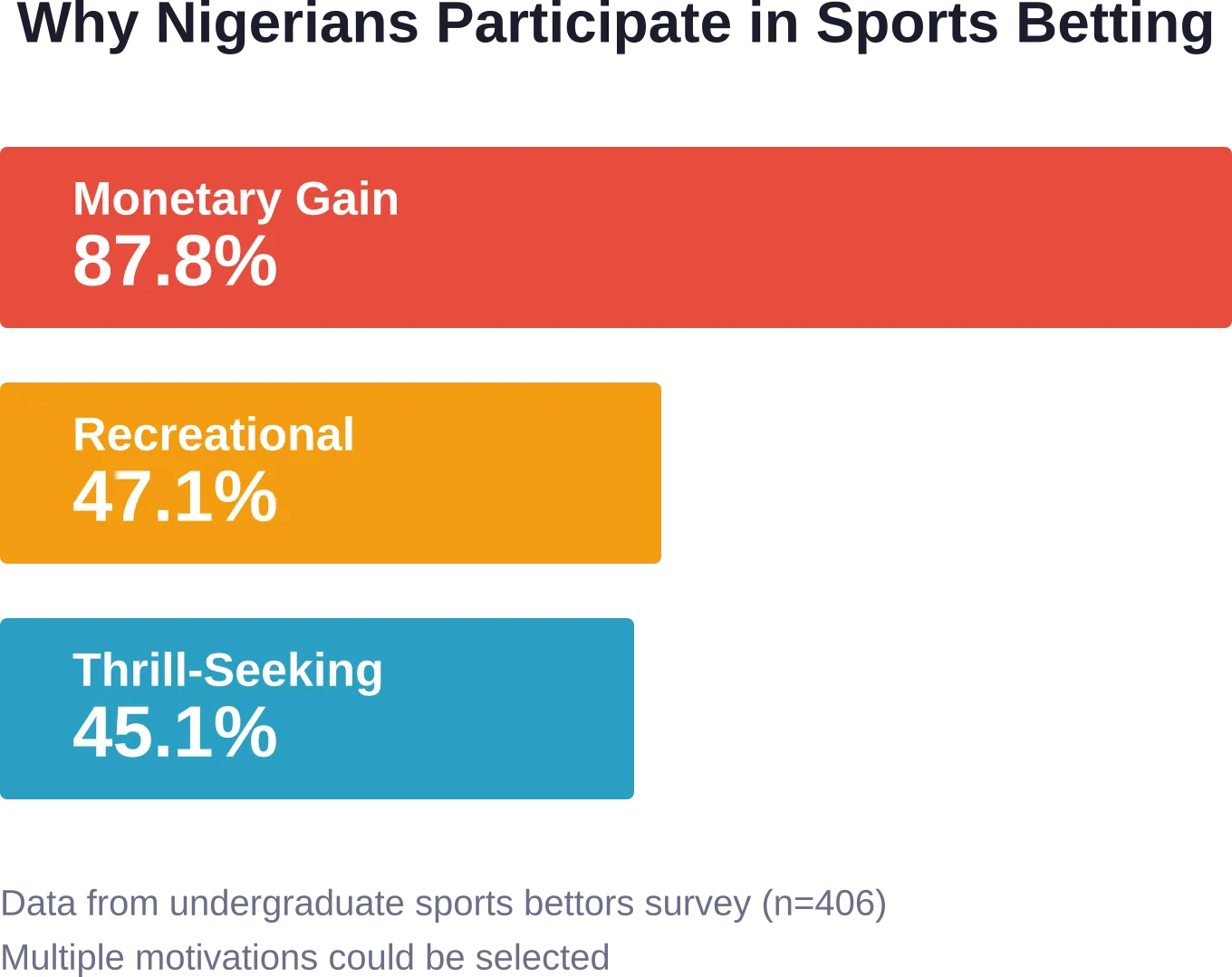
Understanding motivation is critical to understanding the market. Research among Nigerian undergraduates identified three primary drivers for sports betting participation.
Monetary gain dominates. A remarkable 87.8% of respondents cited financial motivation as their reason for betting. This isn’t recreational gambling for entertainment value; it’s economic gambling driven by the hope of income generation.
Recreational purposes came second at 47.1%, while thrill-seeking accounted for 45.1%. The overlap in these figures—participants could cite multiple motivations—shows that betting serves compound purposes: it’s simultaneously an income strategy, entertainment, and source of excitement.
But here’s the thing: when monetary gain drives nearly 90% of participants, the activity shifts from leisure to desperate economic behavior. In a country facing significant youth unemployment and economic challenges, betting becomes framed as an opportunity rather than a risk.
Problem Gambling Prevalence
The darker side of Nigeria’s betting boom emerges in problem gambling statistics. Among all respondents in the undergraduate study, 14.3% met criteria for problem gambling. That figure more than triples when looking only at past-year gamblers: 47.2% showed problem gambling behaviors.
This figure is significant: nearly half of active bettors in the study exhibited problem gambling patterns.
Community studies paint an even grimmer picture. Research identified a prevalence rate for gambling disorder of 30.5% in the study population examined. These aren’t marginal figures; they represent substantial public health concerns.
The academic impact data is sobering: 64.2% of past-year gamblers reported negative effects on their academic performance. For students, betting isn’t just a financial risk; it’s an educational risk that threatens their long-term prospects.
Regulatory and Age Enforcement Gaps
Nigerian law sets the minimum legal gambling age at 18 years. However, enforcement remains weak. Researchers note that legalization in the late 1990s through Chapter 22, section 236 of the Criminal Code Act made gambling more acceptable to the public, including to the under-aged.
Many illegal casinos operate alongside licensed operators, and online platforms often lack robust age verification. The proliferation of betting shops near schools and universities creates accessibility that undermines age restrictions.
Problem Gambling Metric | Rate | Population Context |
|---|---|---|
Problem gambling (all respondents) | 14.3% | Full survey sample |
Problem gambling (active bettors) | 47.2% | Past-year gamblers only |
Gambling disorder (community) | 30.5% | Study population |
Negative academic impact | 64.2% | Student gamblers |
Regulatory Framework and Licensing
The National Lottery Regulatory Commission (NLRC) oversees sports betting licensing in Nigeria. The federal government maintains authority over gambling regulation, though state governments can impose additional requirements.
In the late 1990s, the government legalized certain forms of gambling to generate tax revenues. This policy shift opened the door to the current market expansion, though regulation hasn’t kept pace with growth.
Licensing activity has expanded the regulated market. In February 2020, the NLRC awarded sports betting licenses to operators including Betwinner and Bet24hrs as part of efforts to expand the regulated industry and improve transparency by bringing more operators into the legal framework.
License Requirements and Costs
Starting a sports betting business in Nigeria involves substantial upfront investment. The application fee costs approximately ₦2,000,000, with substantive license fees ranging from ₦50–100 million depending on license type.
Ongoing compliance includes monthly financial and operational reporting to regulators. The 3% gross turnover tax creates recurring government revenue from licensed operators. Capital requirements and technical standards must be met before license approval.
But wait. Despite these requirements, enforcement gaps persist. Many operators function outside the regulated framework, avoiding taxes and operating without proper consumer protections.
Payment Systems and Platform Technology
Nigeria’s payment ecosystem has evolved to support the betting surge. With the majority of bets placed via mobile devices, operators have invested heavily in mobile-first platform designs and seamless payment integration.
Mobile money, bank transfers, and card payments dominate transaction methods. The betting industry has driven innovation in digital payments, creating infrastructure that serves broader e-commerce growth.
Appointing local compliance officers is often recommended for international operators entering the market. Understanding the local payment landscape and integrating with Nigerian banking systems proves critical to platform success.
Review Proven Betting Data Vendors With Sologe

Sports betting statistics in Nigeria are easier to use when businesses connect the numbers with the tools behind the market. Sologe is a B2B marketplace for iGaming suppliers and companies. For teams working with market data, it can help identify vendors that support reporting, analytics, platform management, payments, traffic, affiliate operations, and other business functions around online gaming.
The platform can support data-led vendor research:
- explore analytics and reporting providers
- find sportsbook software and platform vendors
- compare payment and transaction service companies
- review traffic, affiliate, and marketing suppliers
- connect with B2B companies serving iGaming operators
Contact Sologe to find iGaming vendors, compare business-side solutions, or list your company for industry buyers.
Public Health and Social Concerns
The World Health Organization estimates that 1.2% of the world’s adult population has a gambling disorder, but Nigerian rates exceed global averages substantially. Studies show between 5.5% of women and 11.9% of men globally experience some level of harm from gambling.
Nigerian data suggests higher prevalence. When 47.2% of active bettors show problem gambling patterns and community studies find 30.5% disorder rates, the scale of harm becomes clear.
People gambling at harmful levels generate around 60% of gambling revenue globally. This creates a perverse incentive: betting operators derive most profit from those experiencing the greatest harm.
Academic and Economic Impact
Among student gamblers, 64.2% reported negative academic impacts. These include missed classes, reduced study time, poor performance on exams, and in severe cases, dropping out entirely.
The economic impact extends beyond individual losses. Research and anecdotal accounts report financial strain, debt accumulation, and resource diversion from essential needs.
A Swedish study estimated that those with gambling disorder were 15 times more likely to die by suicide than the general population. While Nigerian-specific data on this correlation isn’t available, the mental health implications of widespread problem gambling deserve serious attention.
Comparative Context: Nigeria vs. Other Markets
According to industry sources, Nigeria is second behind South Africa in the number of persons who engage in sports betting activities. However, with continued population growth and increasing internet penetration, Nigeria may claim the top position soon.
The Great Britain gambling industry, for comparison, recorded £15.6 billion in total gross gambling yield between April 2023 and March 2024—a 3.5% increase over the previous year and a 10.2% increase over longer periods. Nigeria’s market, while smaller in absolute terms, shows faster growth rates.
Global gambling revenue is estimated to reach $700 billion by 2028, with smartphone use in low- and middle-income countries driving much of this expansion. Nigeria exemplifies this trend perfectly: young population, rapidly expanding mobile internet, and weak regulatory enforcement.
Frequently Asked Questions
What percentage of Nigerians participate in sports betting?
Research indicates that 51.73% of the Nigerian population had been involved in sports betting activities within the past 12 months according to October 2022 data. Among undergraduate students specifically, 36.7% had engaged in sports betting at some point, with 30.3% participating in the past year. Approximately 60 million Nigerians engage in sports betting overall.
How much revenue does sports betting generate in Nigeria?
Overall gambling spending in Nigeria reached approximately $975 million daily on online betting alone, according to officials from the National Lottery Trust Fund. Industry revenue figures from earlier periods, including projections of substantial annual turnover in naira, have been cited in market analyses. The market continues to grow rapidly year-over-year.
What is the problem gambling rate among Nigerian bettors?
Among all survey respondents in undergraduate research, 14.3% met criteria for problem gambling. However, when examining only past-year gamblers, the rate jumped to 47.2%. Research identified a prevalence rate for gambling disorder of 30.5% in the study population examined. These figures substantially exceed global averages.
How much does a sports betting license cost in Nigeria?
The National Lottery Regulatory Commission charges approximately ₦2,000,000 as an application fee, with substantive license fees ranging from ₦50–100 million depending on license type. Licensed operators must also pay a 3% gross turnover tax levy on ongoing operations, plus submit monthly financial and operational reports to regulators.
What percentage of sports betting happens on mobile devices?
Research indicates that mobile devices account for the majority of bets placed in Nigeria. Overall, online betting represents the dominant platform rather than in physical shops. Among undergraduate bettors surveyed, 66.7% preferred online sports betting platforms. This mobile-first behavior reflects Nigeria’s expanding internet access and smartphone penetration.
Why do Nigerians participate in sports betting?
Monetary gain is the dominant motivation, cited by 87.8% of respondents in undergraduate research. Recreational purposes account for 47.1%, while thrill-seeking motivates 45.1%. The overwhelming focus on financial gain—rather than entertainment—reflects economic pressures and the framing of betting as an income opportunity rather than purely leisure activity.
What is the minimum legal age for gambling in Nigeria?
Nigerian law sets the minimum legal gambling age at 18 years. However, enforcement remains inconsistent, with researchers noting that legalization made gambling more acceptable even to the under-aged. Many betting platforms lack robust age verification, and physical betting shops often operate near schools and universities, creating accessibility issues.
Looking Forward: Sustainability and Reform
Nigeria’s sports betting market sits at a crossroads. The industry generates substantial revenue—for operators, for government through taxes, and occasionally for lucky bettors. But the social costs mount alongside the financial gains.
With 47.2% of active bettors showing problem gambling behaviors and 64.2% of student gamblers experiencing academic harm, the current trajectory isn’t sustainable. Public health experts call for a multipronged prevention approach that includes stricter age enforcement, advertising restrictions, mandatory self-exclusion tools, and expanded treatment services.
Real talk: the regulatory framework hasn’t kept pace with market growth. The NLRC has made efforts to expand licensing and improve transparency, but enforcement gaps remain wide. Illegal operators continue functioning, underage betting persists, and consumer protections prove inadequate.
The path forward requires balancing economic interests with public health priorities. Other jurisdictions offer models: advertising restrictions, stake limits, mandatory responsible gambling messaging, and funding for treatment from industry levies. Nigeria has the legal authority to implement similar measures; what’s needed is political will and enforcement capacity.
The statistics tell a clear story: Nigeria’s sports betting boom has created both opportunity and crisis. How regulators, operators, and society respond in the next few years will determine whether this industry matures into a sustainable, properly regulated market or continues as a source of widespread harm.
The data is available. The patterns are clear. The question is whether stakeholders will act on what the numbers reveal.
Related Articles

September 30, 2026Is Sports Betting Legal in Brazil? The Full...

September 30, 2026Is Sports Betting Legal in Iran? The Real...