 Nothing found for the request
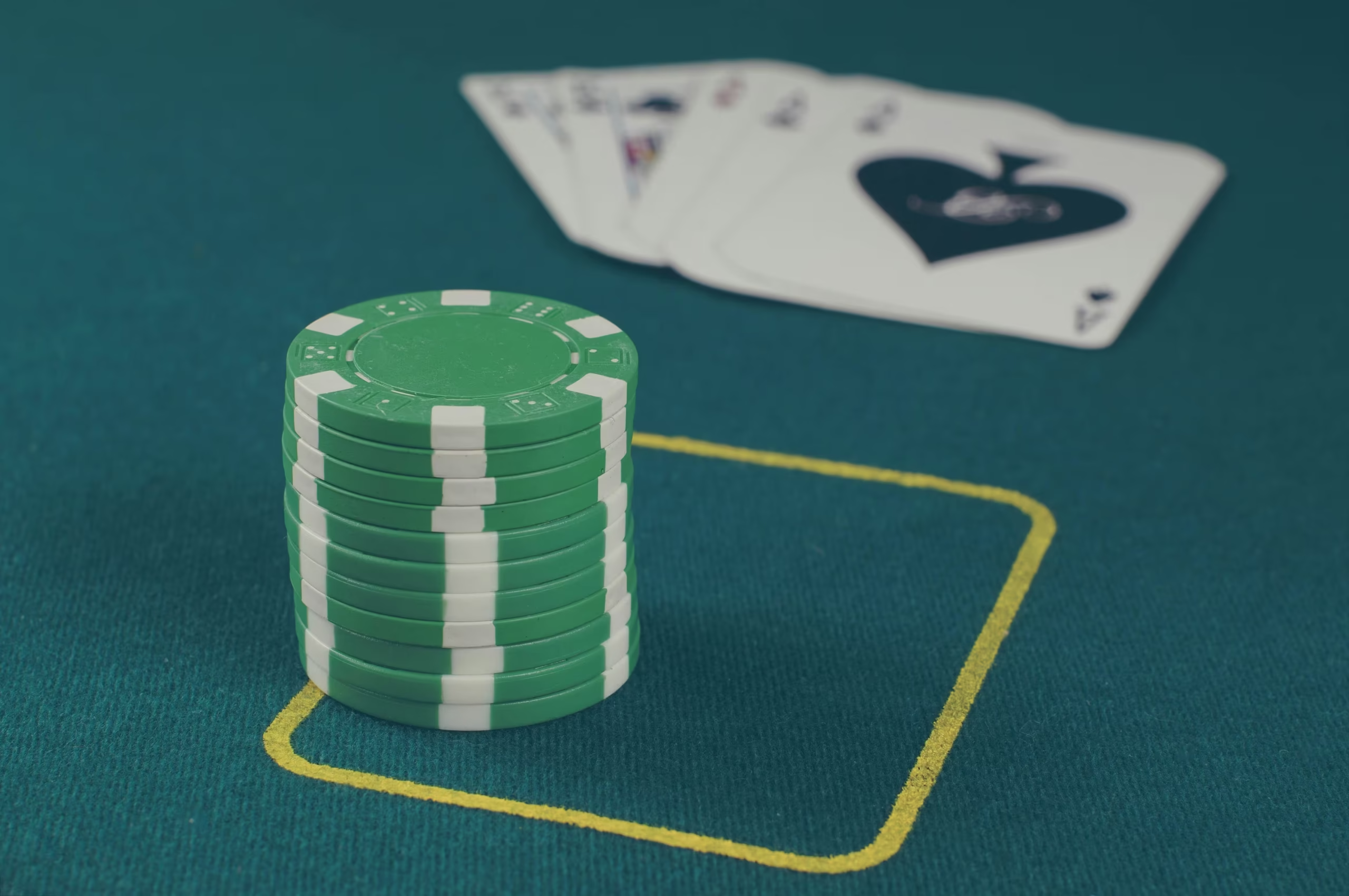
What Does Gambling Mean? Definition & Types Explained
Sologe April 28, 2026
Share:


Quick Summary
Quick Summary: Gambling means risking something of value—usually money—on an event with an uncertain outcome, where chance plays a significant role, with the hope of winning more than what was staked. It encompasses activities like casino games, sports betting, lotteries, and poker. According to the WHO, approximately 1.2% of the world’s adult population has a gambling disorder, and the global gambling industry is projected to reach $700 billion by 2028.
Gambling is one of those concepts people think they understand—until they try to define it clearly. It appears in different forms across cultures, technologies, and legal systems, which makes the meaning broader than it seems at first glance. To understand what gambling really is, it helps to break it down into its core elements and how it shows up in real-world activities.
The Core Definition of Gambling
At its most basic level, gambling is the practice of risking money or belongings on an outcome that’s uncertain. There’s always an element of chance or randomness involved, and the purpose is to win something—typically more money than what was initially staked.
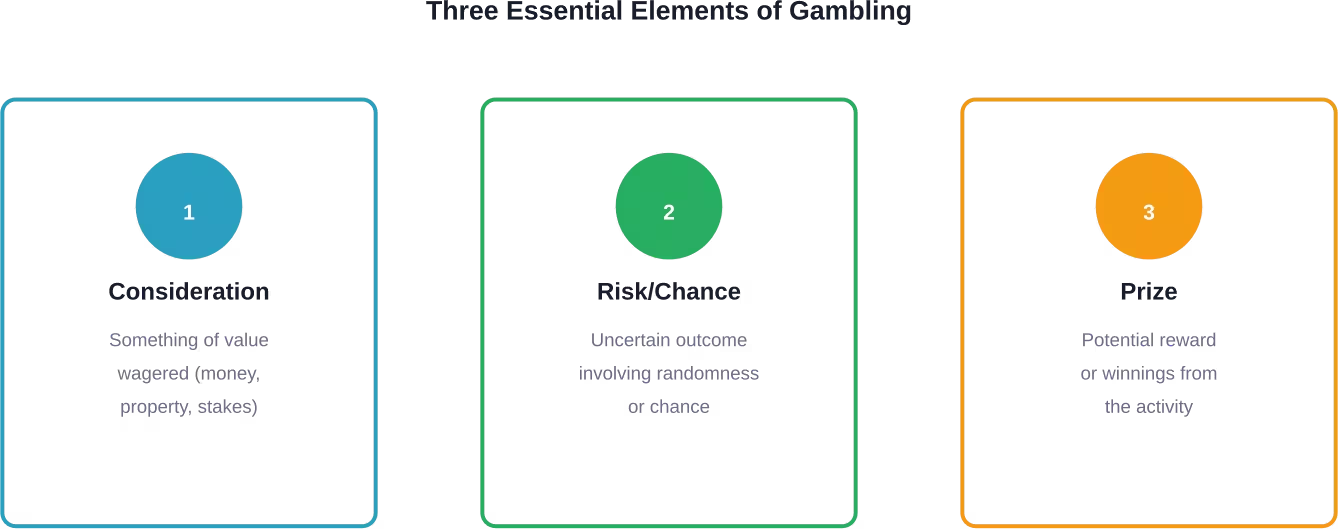
The activity involves three key components: consideration (something of value wagered), risk (uncertainty about the outcome), and prize (potential reward). Without all three elements, it’s not technically gambling.
According to Merriam-Webster, gambling is “the practice or activity of betting.” Wikipedia expands on this, defining it as “the wagering of something of value on a random event whose result may be determined by chance or accident.”
Gambling vs. Gaming: What’s the Difference?
The terms “gambling” and “gaming” often get used interchangeably, but there’s nuance here. “Gaming” has sometimes been used as a softer, more acceptable term—even euphemistically to circumvent laws against “gambling.”
But the WHO recognizes gaming disorder as a separate behavioral issue related to video games, not gambling. Context matters when interpreting which term applies.
Common Types of Gambling Activities
Gambling takes countless forms across cultures and legal systems. Here are the most prevalent types:
Type | Description | Example |
|---|---|---|
Casino Gambling | Games of chance in dedicated gambling establishments | Slot machines, roulette, blackjack, poker |
Sports Betting | Wagering on the outcome of sporting events | Football, horse racing, basketball spreads |
Lotteries | Random draw games with tickets purchased in advance | Powerball, national lotteries, scratch cards |
Online Gambling | Internet-based betting and casino games | Mobile betting apps, online poker, virtual slots |
Private Gambling | Informal betting among individuals | Friendly poker games, office pools, personal wagers |
Traditional gambling methods include card games, fruit machines, and betting on horse races. But technology has transformed the landscape dramatically.
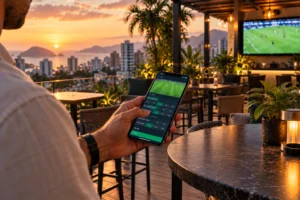
Today, there are hundreds of gambling companies offering casino-style games and betting apps that can be downloaded onto smartphones, tablets, or laptops. These provide 24-hour access to gambling from anywhere, significantly expanding participation.
The Scale of Gambling Worldwide
The gambling industry represents massive economic activity. A rough estimate suggests about $10 trillion is legally wagered annually worldwide—with illegal gambling adding substantially more.
According to the World Health Organization, industry analysts estimate global gambling revenue will reach $700 billion by 2028. Smartphone use in low- and middle-income countries will drive much of this growth.
Here’s something striking: people gambling at harmful levels generate around 60% of losses (which become gambling revenue for operators). This reveals how the industry disproportionately profits from those experiencing problems.
Build iGaming Products That Fit Real Market

Gambling is not just a concept – it is a system built from platforms, games, payment flows, and supporting services. As the industry expands across formats and regions, companies need a clear way to understand how these parts come together in practice. Sologe is a B2B iGaming marketplace where operators explore solutions and vendors present their products within a structure that reflects how the industry actually works today.
Shape Your Position in the iGaming Ecosystem
Sologe helps companies work within real industry categories and connections:
- Position products within specific types of gambling solutions
- Explore how different services connect inside live operations
- Reach companies already working with defined formats and models
- Build direct links between products, platforms, and business needs
Contact Sologe to discuss how your solution fits into today’s iGaming ecosystem or to find the right components for your business.
When Does Gambling Become a Problem?
Most people who gamble do so recreationally without significant consequences. But for a small proportion, it develops into gambling disorder—a recognized behavioral addiction.
The World Health Organization defines gambling disorder in the ICD-11 as a pattern of gambling behavior characterized by impaired control over gambling, increasing priority given to gambling over other activities, and continuation or escalation of gambling despite negative consequences.
According to WHO data, around 5.5% of women and 11.9% of men globally experience some level of harm from gambling. A Swedish study estimated that those with a gambling disorder were 15 times more likely to die by suicide than the general population.
Gambling Disorder Criteria
The DSM-5 reclassified gambling disorder from “Impulse Control Disorders” to “Substance-related and Addictive Disorders,” recognizing its similarities to substance addictions.
The diagnostic criteria include patterns like needing to gamble with increasing amounts of money, repeated unsuccessful efforts to control or stop gambling, being preoccupied with gambling, and jeopardizing relationships or employment because of gambling.
Research from the National Institutes of Health shows that gambling disorder shares neurobiological features with substance use disorders, including changes in dopamine activity in the brain’s reward centers.
Legal and Illegal Gambling
Gambling legality varies dramatically by jurisdiction. Some countries embrace it fully, others permit only certain forms, and some ban it entirely.
Legal gambling typically requires commercial and professional organizations to operate efficiently, especially for large-scale activities like horse racing and lotteries. These operations are regulated, taxed, and subject to consumer protection laws.
Illegal gambling operates outside these frameworks. The distinction between legal and illegal gambling has been normalized through commercial associations with sports and cultural activities that are now heavily promoted.
Frequently Asked Questions
What is the simplest definition of gambling?
Gambling is risking money or something of value on an event with an uncertain outcome, where chance plays a role, in hopes of winning more than what was staked.
Is gambling always about money?
Not always. While money is the most common stake, gambling can involve any item of value, including property, goods, or services.
What’s the difference between gambling and investing?
Investing involves calculated decisions based on research and aims for long-term value growth through assets. Gambling relies mainly on chance and does not create underlying value. However, highly speculative investments can resemble gambling.
How common is problem gambling?
Approximately 1.2% of adults globally have a gambling disorder. However, a larger portion experiences some level of harm, affecting a significant share of the population.
Are online gambling and traditional gambling the same thing?
They share the same core definition, but online gambling offers constant access and faster gameplay, which can increase participation and risk compared to traditional, location-based gambling.
Is poker considered gambling?
Yes. Poker is considered gambling when played for money or stakes. Although skill plays a role, the element of chance makes it gambling under most definitions.
What makes gambling different from gaming?
Gambling involves risking money or valuables for potential financial gain. Gaming typically refers to playing video games for entertainment. While the terms are sometimes used interchangeably, they represent different activities.
Understanding the Meaning Behind Gambling
So what does gambling really mean? It’s fundamentally about human psychology—the thrill of uncertainty, the hope of reward, and the willingness to accept risk for potential gain.
The activity has existed across virtually all cultures throughout history. From ancient dice games to modern sports betting apps, the core appeal remains constant even as the methods evolve.
Understanding gambling means recognizing both its recreational role for millions and its potential for harm in vulnerable populations. The WHO’s inclusion of gambling disorder in the ICD-11 reflects growing recognition of gambling as a public health concern, not just entertainment or moral issue.
As technology continues expanding access—particularly through smartphones in developing countries—the importance of understanding what gambling means and its potential consequences becomes increasingly critical for individuals, families, and societies.
If you or someone you know is experiencing negative consequences from gambling, resources are available through healthcare providers and specialized gambling support organizations.
Related Articles
September 30, 2026Is Sports Betting Legal in Brazil? The Full...

September 30, 2026Is Sports Betting Legal in Iran? The Real...