 Nothing found for the request

What Is the Minimum Age for Gambling? 2026 Guide
Sologe April 28, 2026
Share:


Quick Summary
Quick Summary: The minimum gambling age varies by jurisdiction and gambling type. In the United States, most states require players to be 21 for casino gambling and sports betting, though some allow 18-year-olds to participate in certain activities like lottery and bingo. Internationally, 18 is the most common minimum age, though requirements range from no restrictions in some countries to 25 in others.
Gambling age requirements aren’t as straightforward as you might think. While you might assume there’s a universal standard, the legal age to gamble varies dramatically depending on where you are and what type of gambling you’re doing.
In the United States alone, you’ll find states where 18-year-olds can legally place bets alongside others that won’t let you near a slot machine until you’re 21. The situation gets even more complex when you factor in different gambling types—lottery tickets, casino floors, sports betting, and online gambling all operate under different rules.
Understanding these age restrictions isn’t just about staying on the right side of the law. Research from the National Institutes of Health shows that starting gambling below the minimum legal age increases an individual’s likelihood of developing gambling-related problems later in life. The stakes are real.
Why Gambling Age Limits Exist
Age restrictions on gambling serve as a protective barrier, particularly for young people whose brains are still developing. According to medical research published in the Journal of Gambling Studies, individuals who begin gambling before reaching the legal age face significantly higher long-term risks.
The research is clear: early exposure to gambling correlates with higher rates of problem gambling in adulthood. A study analyzing data from 4,833 respondents found that those who started gambling underage showed measurably different risk profiles compared to those who waited until legally permitted.
But here’s the thing—these age limits aren’t arbitrary numbers pulled from thin air. They’re based on developmental psychology, public health data, and decades of observing gambling’s impact on different age groups.
State legislatures and regulatory bodies set these limits with specific goals: preventing youth gambling, reducing pathological gambling rates, and protecting vulnerable populations from financial harm. The National Research Council’s critical review on pathological gambling emphasizes that age restrictions represent one of the primary harm reduction strategies available to policymakers.
Use a Marketplace Built for Gaming Vendors

Sologe helps companies list and manage gaming-related products in one environment. It focuses on simple publishing and clear categorization.
Want to Publish Your Offer?
List with Sologe to:
- create listings for gaming products
- group them by category
- present them to marketplace users
👉 Get in touch with Sologe to start listing
United States: State-by-State Breakdown
The legal gambling age in America isn’t a single number—it’s a patchwork of state regulations that can confuse even seasoned gamblers. Most states fall into two camps: those requiring gamblers to be 21 and those permitting certain gambling activities at 18.
The 21-and-Over Standard
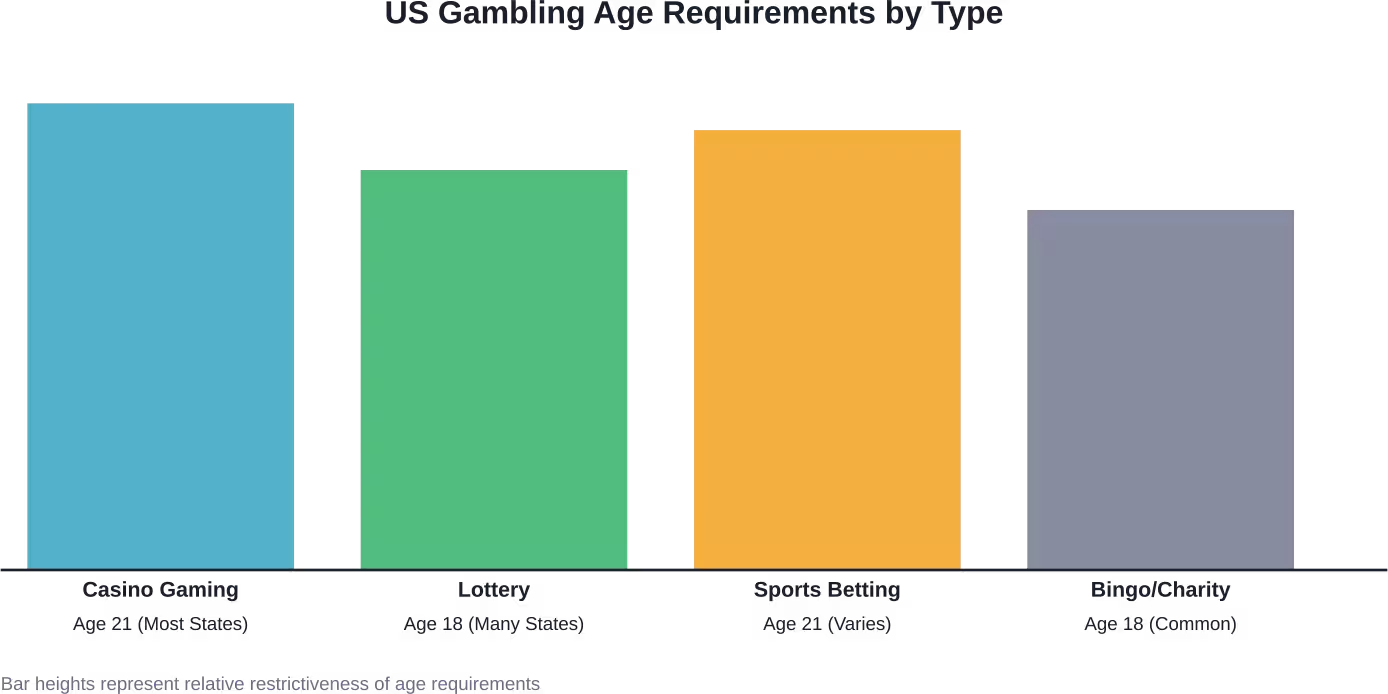
The majority of states have set 21 as the minimum age for casino gambling. This includes all activities on casino floors—slot machines, table games, poker rooms, and sports betting.
States like Nevada, New Jersey, and Pennsylvania strictly enforce this 21-year requirement for all casino activities. According to Maine’s gaming statutes, slot machine operators and casino operators cannot permit anyone under 21 to play slot machines or table games, and minors are prohibited from areas where these games are located.
The 21-year threshold typically applies to:
- Commercial and tribal casinos
- Slot machines and video lottery terminals
- Sports betting (in most states)
- Poker rooms in casinos
- Online casino gambling where legal
States Allowing 18-Year-Olds
Several states permit 18-year-olds to participate in specific gambling activities, though rarely all types. These states often distinguish between different gambling categories.
Florida’s Gaming Control Commission confirms that private recreational poker games and dominoes are legal for individuals who are at least 18 years old, provided no one profits from running the game and certain conditions are met.
Common activities available to 18-year-olds in various states include:
- State lottery tickets
- Bingo games
- Pari-mutuel betting on horse racing
- Some tribal casinos (depending on state-tribal compacts)
- Charitable gaming events
Sports Betting Age Requirements
Sports betting presents its own complications. Since the Supreme Court struck down the Professional and Amateur Sports Protection Act in 2018, states have individually legalized and regulated sports wagering—each setting its own age requirements.
Most states that allow sports betting require participants to be 21. However, several states permit 18-year-olds to bet on sports, creating a split landscape for sports bettors.
States where 18-year-olds can legally bet on sports include Montana, Rhode Island, and Wyoming, among others. But the majority—including major sports betting markets like New York, New Jersey, and Nevada—maintain the 21-year minimum.
New York Governor Kathy Hochul announced measures in March 2026 to strengthen protections preventing youth from accessing sports wagering, including advanced verification systems and operator requirements to check on patron activity.
Online Gambling Age Verification
Online gambling age requirements typically match in-person requirements in most jurisdictions. If you need to be 21 to enter a physical casino in Nevada, you need to be 21 to gamble online there as well.
The challenge? Enforcement. Online platforms use age verification systems, but the digital nature of internet gambling makes underage access a persistent concern.
State | Casino Age | Lottery Age | Sports Betting Age |
|---|---|---|---|
Nevada | 21 | 18 | 21 |
New Jersey | 21 | 18 | 21 |
California | 21 (18 for tribal) | 18 | Not legal |
Florida | 21 (18 for some tribal) | 18 | 21 |
Pennsylvania | 21 | 18 | 21 |
New York | 21 (18 for some tribal) | 18 | 21 |
Montana | 18 | 18 | 18 |
Wyoming | 18 | 18 | 18 |
International Gambling Age Requirements
Step outside the United States and the gambling age landscape shifts considerably. While 18 represents the global standard, variations exist that might surprise you.
Common International Standards
Most countries have settled on 18 as the minimum gambling age for all activities. The United Kingdom, Australia (for land-based gambling), France, and Germany all require gamblers to be at least 18 years old.
This 18-year threshold aligns with the age of majority in most countries—the point at which individuals are considered legal adults with full rights and responsibilities.
Australia presents an interesting case: while land-based gambling is legal at 18, the Interactive Gambling Act 2001 banned online casino gambling and slots at the federal level, regardless of age.
Countries With Higher Age Limits
Some jurisdictions have determined that 18 isn’t sufficient protection. These countries require gamblers to be older before they can legally place bets.
Countries and regions with age 21 requirements include certain states in the United States (as discussed), some casinos in specific jurisdictions, and areas with particularly conservative gambling policies.
A few countries have set the bar even higher at 25, though this remains relatively uncommon globally.
Countries With Lower or No Age Limits
On the opposite end of the spectrum, some countries either have no formal gambling age restrictions or set the limit lower than the international norm.
Certain jurisdictions permit gambling at 13, though these are exceptions rather than the rule and typically apply only to specific, low-stakes activities.
In some countries, gambling is illegal at any age, making the question of minimum age moot. These nations have banned gambling entirely based on religious, cultural, or policy grounds.
Country/Region | Minimum Age | Notes |
|---|---|---|
United Kingdom | 18 | Online and land-based |
Australia | 18 | Online casinos banned federally |
France | 18 | Casinos and online |
Germany | 18 | Most gambling activities |
Canada | 18 or 19 | Varies by province |
Japan | 20 | Limited legal gambling |
South Korea | 19 | Restricted gambling options |
Different Types of Gambling, Different Age Limits
Not all gambling is treated equally under the law. Jurisdictions frequently distinguish between gambling types, setting different age requirements based on perceived risk and social acceptability.
Lottery and Scratch Cards
Lottery games typically have lower age requirements than casino gambling. Many states permit 18-year-olds to purchase lottery tickets and scratch cards, even when casino access requires being 21.
According to the National Research Council, if a person entitled to a lottery prize is under 18 years of age, the director may direct payment to an adult family member or guardian, with the check made payable to the minor.
This lower threshold reflects the perception that lottery games pose less immediate risk than continuous gambling activities like slot machines or table games.
Pari-Mutuel Betting and Horse Racing
Horse racing and other pari-mutuel betting often fall into the 18-year-old category. The tradition of horse racing and its perceived skill component have historically led to more lenient age restrictions.
Many states permit 18-year-olds to wager at racetracks while maintaining 21-year requirements for casinos.
Bingo and Charitable Gaming
Bingo represents the most permissive category in many jurisdictions. Some states allow participation as young as 16, though 18 is more common.
The charitable nature of many bingo operations and the social, community-oriented environment contribute to these lower age thresholds. Legislators view bingo as less risky than commercial casino gambling.
Poker Rooms and Card Games
Poker presents a unique case because it straddles the line between skill and chance. Casino poker rooms typically follow the same age restrictions as other casino games—usually 21.
However, private poker games operate under different rules. As Florida’s regulations note, private recreational poker games are legal for those 18 and older when no one profits from running the game.
Consequences of Underage Gambling
What happens when someone gambles below the legal age? The consequences vary depending on jurisdiction and circumstances, but they’re serious across the board.
For the Underage Gambler
Minors caught gambling can face criminal charges, fines, community service, and mandatory counseling. Winnings are typically forfeited—you won’t keep money won while gambling illegally.
Beyond immediate legal consequences, early gambling carries long-term risks. Research published by the National Institutes of Health demonstrates that starting gambling below the minimum legal age significantly increases the likelihood of developing gambling problems in adulthood.
A population-based study examining young adults aged 17-24 found that participation in gambling in the last year was reported by 54% of 17-year-olds, rising to 68% at age 20 and 66% at age 24. Regular weekly gambling patterns showed concerning trends among those who started early.
For Gambling Operators
Establishments that allow underage gambling face severe penalties: hefty fines, license suspension or revocation, and criminal charges for operators and staff.
Regulatory bodies take underage gambling seriously. A single violation can result in disciplinary action that threatens the entire operation. That’s why casinos and online platforms invest heavily in age verification systems.
For Adults Who Facilitate
Adults who help minors gamble—whether by purchasing lottery tickets for them, allowing them into casinos, or providing access to online gambling accounts—can face criminal charges.
The legal principle is clear: facilitating underage gambling is itself a crime, separate from the minor’s violation.
Public Health Perspectives on Gambling Age
The gambling age debate isn’t just legal—it’s a public health issue. A global public health commission recently classified legalized gambling as a major public health concern.
According to research from Harvard Kennedy School, net global losses by gamblers could exceed $700 billion by the year 2028. The explosion of online and mobile betting has created serious public health challenges, with vulnerable populations—including young people—at particular risk.
A 2021 perspective published in Frontiers in Psychiatry explored age restrictions as a harm reduction approach, particularly regarding youth online gambling. The research noted concerning convergences between gambling and videogaming that may expose young people to gambling-like activities before they reach legal age.
The evidence supports maintaining and enforcing age restrictions. Medical research consistently shows that early gambling exposure correlates with higher rates of problem gambling, financial difficulties, and associated mental health challenges.
How Gambling Age Is Determined
How do lawmakers decide on these age limits? It’s not arbitrary—several factors influence the decision-making process.
State legislatures consider developmental psychology research showing that brain development continues into the mid-20s, particularly in areas governing risk assessment and impulse control.
They examine public health data on gambling disorder prevalence among different age groups. They consider social norms and cultural attitudes toward gambling and youth protection.
Economic factors play a role too. States balance the revenue generated from expanded gambling access against the social costs of gambling-related harm.
Political considerations matter. In states with significant casino industries, lobbying influences legislation. In others, religious or moral opposition to gambling drives more restrictive policies.
The result is the varied landscape we see today—different states reaching different conclusions about the appropriate balance between individual freedom and public protection.
Age Verification Methods
Enforcing age restrictions requires effective verification. Gambling operators use several methods to confirm that patrons meet minimum age requirements.
Physical Casinos
Land-based casinos check government-issued identification at entry points. Security personnel are trained to spot fake IDs and verify document authenticity.
Modern casinos use ID scanning technology that reads driver’s licenses and passports, automatically calculating age and flagging suspicious documents.
Some jurisdictions require casinos to maintain logs of age verification, creating an audit trail for regulatory compliance.
Online Platforms
Online gambling platforms face unique challenges. They can’t physically examine an ID, so they rely on digital verification methods.
Common online age verification techniques include database checks against public records, credit card verification (as credit cards require being 18+), third-party identity verification services, and document upload requirements where users submit photos of government IDs.
Despite these measures, online age verification remains imperfect. Determined minors can sometimes circumvent these systems, which is why regulatory bodies continue pushing for improved verification technologies.
Frequently Asked Questions
Can you gamble at 18 anywhere in the United States?
Yes, several states allow 18-year-olds to engage in specific gambling activities. States like Montana and Wyoming permit 18-year-olds to gamble in certain casinos and bet on sports. Many states also allow 18-year-olds to purchase lottery tickets, play bingo, and bet on horse racing, even when casino access requires being 21. The specific activities available vary significantly by state.
What happens if you win money gambling underage?
Winnings from underage gambling are typically forfeited. Casinos and gambling operators will not pay out prizes to minors, and any money won is generally confiscated. The minor may face additional consequences including fines, criminal charges, and mandatory counseling. Adults who facilitated the underage gambling can also face legal penalties, and the gambling establishment may face regulatory sanctions.
Why is the gambling age 21 in most states instead of 18?
Most states set the casino gambling age at 21 to align with alcohol laws, as casinos typically serve alcohol on gaming floors. Research on brain development also supports the higher age limit, showing that risk assessment and impulse control continue developing into the mid-20s. Public health data indicating higher rates of problem gambling among younger individuals also influences this decision.
Can parents take their children into casinos?
Generally, no. Most casino regulations prohibit minors from gaming floors entirely, even when accompanied by parents or guardians. Some casinos allow minors to pass through gaming areas to access restaurants, hotels, or entertainment venues, but they cannot linger or participate in gambling. Rules may vary for tribal casinos depending on local regulations.
Is online gambling age verification reliable?
Online gambling age verification has improved significantly but is not foolproof. Platforms use methods like database checks, document verification, and third-party identity services. However, determined minors may still bypass systems using false or borrowed information. Regulators continue to push for stronger verification measures.
Do other countries enforce gambling age limits strictly?
Enforcement varies by country. The United Kingdom and Australia have strong enforcement and penalties for violations, while other countries may have weaker oversight. Cross-border online gambling creates additional challenges, as users can access sites licensed in jurisdictions with different rules.
Can gambling age laws change?
Yes, gambling age laws can change through legislative action. As gambling expands—especially online and sports betting—states regularly update regulations. Changes often focus on increased protection rather than relaxation, driven by public health research and concerns about problem gambling.
Conclusion
The minimum age for gambling isn’t a simple, universal number. It’s a complex landscape shaped by jurisdiction, gambling type, and evolving public health understanding.
In the United States, most casino gambling requires being 21, while many states permit 18-year-olds to participate in lottery, bingo, and certain other activities. Internationally, 18 represents the most common standard, though variations exist on both ends of the spectrum.
These age restrictions exist for good reasons. Research consistently demonstrates that early gambling exposure increases long-term risks of problem gambling and related harms. The developmental vulnerabilities of young people justify protective policies, even as they limit individual freedoms.
Whether you’re planning to gamble, working in the industry, or simply curious about the regulations, understanding these age requirements is essential. The legal consequences of underage gambling affect both the minor and facilitating adults. The personal consequences can extend far into the future.
Before gambling anywhere, verify the specific age requirements for your location and the activity you’re planning. Laws change, jurisdictions vary, and ignorance provides no legal protection. Stay informed, gamble responsibly, and respect the age limits designed to protect vulnerable populations.
Related Articles

September 30, 2026Is Sports Betting Legal in Brazil? The Full...

September 30, 2026Is Sports Betting Legal in Iran? The Real...