 Nothing found for the request

Who Owns Betting Companies in Kenya? 2026 Ownership Guide
Sologe June 8, 2026
Share:


Quick Summary
Quick Summary: Kenya’s betting industry is dominated by international companies operating through local subsidiaries, with complex ownership structures spanning the UK, Bulgaria, and beyond. Major players include SportPesa (owned by UK-based SportPesa Global Holdings Limited with connections to Kenya’s political elite), Betway (Super Group), Bet365, and 22Bet, alongside local operators like Betika. These companies leverage regulatory frameworks, tax treaties, and licensing structures to operate in Kenya’s lucrative betting market, which handles hundreds of millions of pounds monthly.
Kenya’s betting scene has exploded over the past decade. Walk through any neighborhood in Nairobi, Mombasa, or Kisumu, and you’ll see betting shop after betting shop. But here’s the thing—most Kenyans placing bets have no idea who actually owns these companies.
The ownership structures aren’t exactly advertised on billboards. They’re buried in corporate registries, spread across multiple jurisdictions, and sometimes tied to surprising political connections.
So who’s really pulling the strings?
The Big International Players: Who Controls Kenya's Betting Giants
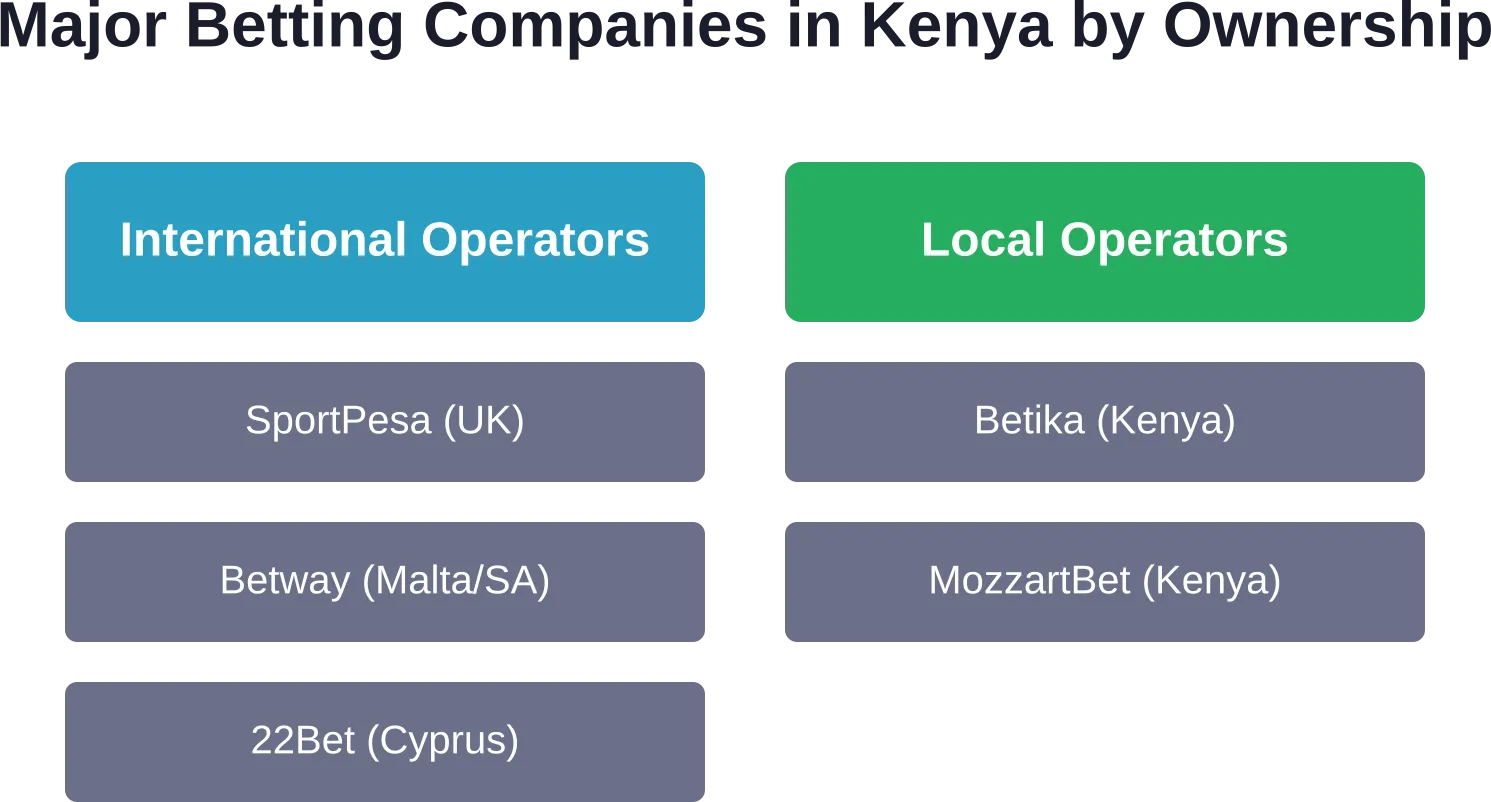
Kenya’s betting market isn’t controlled by Kenyans—at least not mostly. The biggest operators are international corporations that set up local subsidiaries to tap into one of Africa’s most active gambling markets.
SportPesa: The Complicated UK-Kenya Connection
SportPesa is probably the most recognized betting brand in Kenya. But the ownership story? That’s where things get interesting.
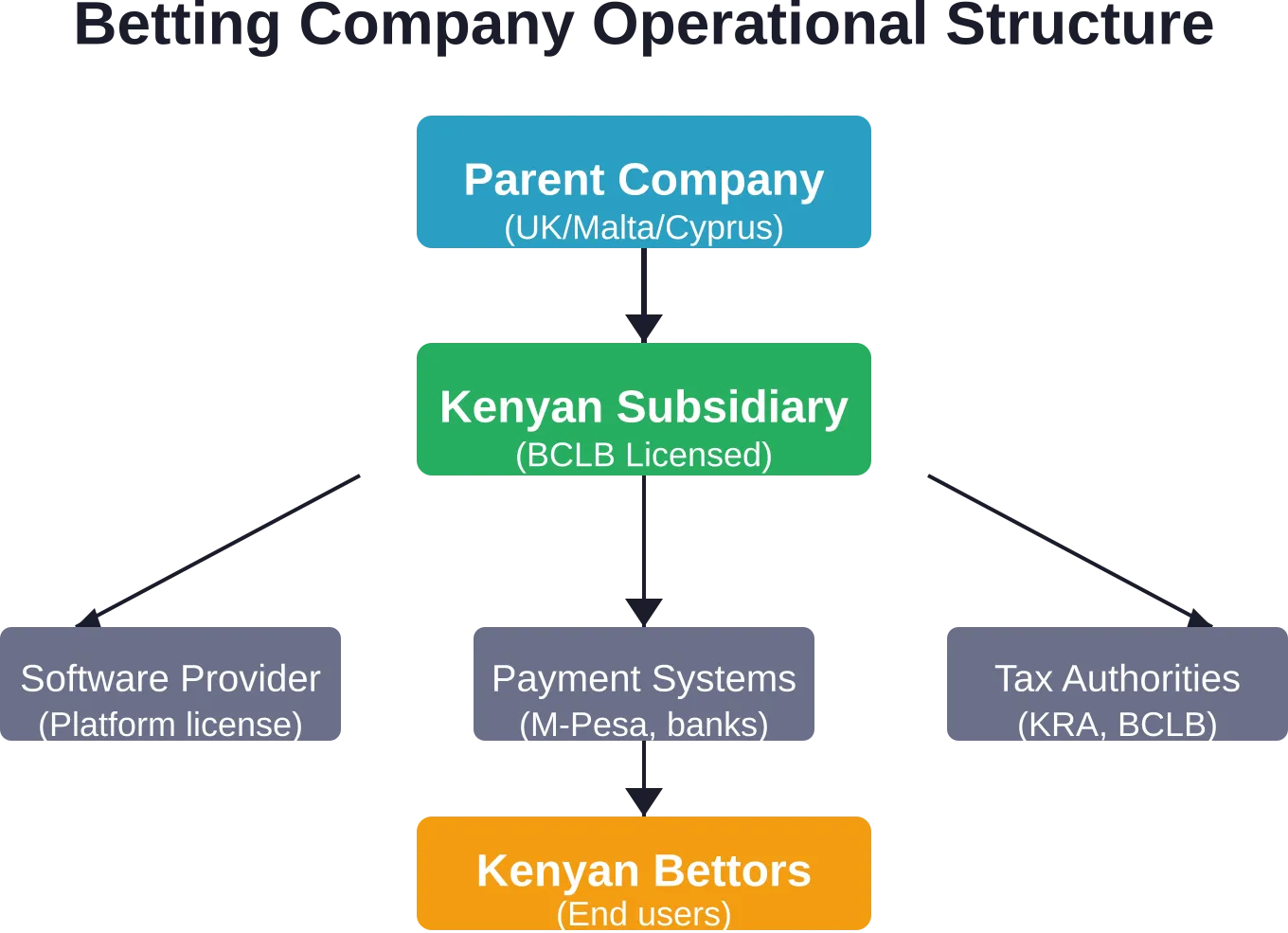
The company operates through a local entity, Pevans East Africa (and later Milestone Games Limited), while its international operations and software infrastructure are linked to SportPesa Global Holdings Limited (UK) and SPS Sportsoft Ltd. According to Finance Uncovered, one shareholder is a cousin of former Kenyan President Uhuru Kenyatta. That political connection raised eyebrows when the company was navigating regulatory challenges in Kenya.
Here’s what makes SportPesa’s structure fascinating: the company has exploited a 43-year old double taxation treaty between the UK and Kenya to significantly reduce its tax obligations. According to reporting from Finance Uncovered, this arrangement enabled SportPesa to build a profits reserve in the UK of £22 million as of its 2018 accounts.
The tax strategy works by shifting profits from Kenya (where they’re generated) to the UK (where the parent company is registered). The double taxation treaty prevents those profits from being taxed twice, but critics argue it allows companies to minimize what they contribute to Kenya’s tax base despite making substantial revenues there.
Betway: South African Ownership, Global Reach
Betway operates in Kenya but is owned by Super Group, a massive international gambling conglomerate with global operations.
Super Group doesn’t hide its international structure. The company is listed on the New York Stock Exchange and operates betting platforms in dozens of markets. Kenya is just one piece of a much larger puzzle.
Bet365, 22Bet, and the International Roster
Other major international operators include Bet365 (UK-based), 22Bet (registered in Cyprus), Betwinner, and Melbet. These companies operate through licensing agreements with the Betting Control and Licensing Board (BCLB), Kenya’s regulatory authority.
Most of these operators don’t manufacture their own software or payment systems. They license white-label solutions from international providers, then customize them for the Kenyan market.
Local Operators: The Kenyan-Owned Exception
Not everything is foreign-owned. Betika stands out as one of the few genuinely Kenyan betting companies.
Betika was founded by Kenyan entrepreneurs and has grown into one of the top betting sites in Kenya. The company focuses specifically on the local market, tailoring its platform to Kenyan payment methods (M-Pesa integration is seamless), popular sports, and local betting preferences.
MozzartBet is another operator with strong local connections, though it has Serbian parent company ties. Still, its Kenyan operations are run largely by local management.
These local operators face tough competition from international giants with deeper pockets and more sophisticated marketing budgets. But they understand the Kenyan market in ways foreign companies sometimes don’t.
How These Companies Operate in Kenya: The Regulatory Framework
Ownership is one thing. Actually operating legally in Kenya? That’s another.
Every betting company in Kenya must obtain a license from the Betting Control and Licensing Board (BCLB), established under Section 3(1) of the Betting, Lotteries and Gaming Act (Cap 131). The BCLB oversees all betting, lotteries, and gaming operations to ensure they’re conducted responsibly and transparently.
The Licensing Process
Setting up a betting company in Kenya requires several steps. First, the company must be registered as a legal entity in Kenya—even if it’s owned by a foreign parent corporation.
Next comes the BCLB license application. This involves submitting detailed business plans, proof of financial stability, technical system documentation, and compliance with anti-money laundering (AML) and counter-financing of terrorism (CFT) regulations.
The process isn’t quick or cheap. Companies must demonstrate they have robust systems for responsible gambling, data protection, and dispute resolution.
Tax Obligations: What Operators Pay
Operators are subject to strict tax requirements:
- 15% Gross Gaming Revenue Tax: Applied to the company’s total revenue from betting operations
- 5% Withholding Tax: Deducted from player winnings before payout
According to KDS Advocates, strict adherence to tax obligations is critical to maintaining operational compliance. Companies that fall behind on taxes risk losing their licenses.
But here’s where it gets complicated: international operators like SportPesa can use tax treaties to shift profits offshore, reducing their UK tax bills while technically complying with Kenyan requirements. That’s legal, but it’s sparked debate about whether Kenya is getting a fair share of betting revenues.
The Scale of Kenya's Betting Market: Just How Big Is It?
Kenya’s betting industry isn’t small. According to leaked figures reported by Finance Uncovered, the market handles approximately £235 million per month in betting activity.
That’s a staggering figure for a developing economy. Kenya has an adult population of around 35 million, according to 2019 census figures from the Kenya National Bureau of Statistics. The average amount bet per stake was Sh170 (£1.30).
The sheer volume of small bets adds up. Kenyans are betting on everything from English Premier League matches to local football, virtual sports, and casino games.
Who’s Making Money?
The betting companies themselves are profitable—very profitable. But there’s growing concern about the social cost.
Mental health advocates like Nelson Bwire, co-founder of the Gaming Awareness Society of Kenya, have reacted with shock at the scale of betting activity. The concern is that millions of Kenyans are betting money they can’t afford to lose, chasing wins that statistically won’t come.
The companies make money regardless of who wins. The house edge is built into every bet. And with withholding tax taking 5% of winnings, even successful bettors are paying a steep price.
Political Connections and Regulatory Battles
Kenya’s betting industry hasn’t always had smooth sailing. The government has cracked down multiple times, suspending licenses, demanding back taxes, and threatening to shut down operators.
SportPesa famously exited Kenya in 2019 after a tax dispute with the Kenya Revenue Authority (KRA). The company returned in 2020 after negotiations, but the episode highlighted the sometimes tense relationship between betting operators and regulators.
Political connections matter. When one of your shareholders is related to the president, doors tend to open. But even those connections have limits when public pressure mounts over gambling’s social impact.
The Gambling Control Bill: New Rules on the Horizon
The Gambling Control Bill, 2023 is set to introduce stricter laws, higher security deposits, and new license categories. According to legal experts at KDS Advocates, companies need to act now before the new regulations take effect.
The bill aims to tighten oversight, increase penalties for non-compliance, and give regulators more power to suspend or revoke licenses. For betting companies—especially smaller operators—the new rules could be make-or-break.
Who Really Benefits? Follow the Money
So who’s actually benefiting from Kenya’s betting boom?
International shareholders are collecting dividends from Kenyan betting revenues. Software providers (often based in Europe or Israel) are licensing their platforms for hefty fees. Payment processors are taking transaction cuts.
Kenya gets tax revenue—15% of gross gaming revenue and 5% of winnings. That’s significant, but critics argue it’s a fraction of what betting companies actually make.
Meanwhile, Kenyan bettors are losing more than they win. That’s how math works. The house always has an edge.
Stakeholder | How They Benefit | Estimated Share |
|---|---|---|
International Owners | Dividends, profit repatriation | Majority of net profits |
Kenyan Government | Tax revenue (GGR + withholding tax) | ~30-35% of gross revenue |
Software/Tech Providers | Licensing fees, platform revenue share | 15% of gross revenue |
Payment Processors | Transaction fees (M-Pesa, banks) | 2-5% of transactions |
Kenyan Bettors | Entertainment value (winnings are statistically negative) | Net loss overall |
Local vs. International: Does Ownership Structure Matter?
Does it make a difference whether a betting company is Kenyan-owned or foreign-owned?
From a consumer perspective, maybe not much. Betika and SportPesa both offer similar platforms, accept M-Pesa, and provide customer support in English and Swahili.
But from an economic perspective, ownership matters a lot. Profits from Kenyan-owned companies are more likely to stay in Kenya—reinvested in local businesses, spent in the local economy, or taxed as personal income for Kenyan shareholders.
International companies can (and do) shift profits offshore. That’s perfectly legal under current tax treaties, but it means less money circulating in Kenya’s economy.
There’s also the question of accountability. Local companies are easier for Kenyan regulators to pressure. International corporations can threaten to pull out entirely if regulations become too strict—and they’ve done exactly that in the past.
The Software Providers Behind the Scenes
Most betting companies in Kenya don’t build their own platforms from scratch. They license software from specialized providers.
Companies like Altenar provide iGaming and sports betting software solutions to operators in Kenya. They deliver turnkey solutions—everything from sportsbook platforms to payment integration, compliance tools, and mobile apps.
These providers often take a percentage of revenue or charge hefty licensing fees. For smaller operators, that cuts significantly into margins. For big players, it’s a cost of doing business.
The result is that many betting sites look and feel similar. They’re built on the same underlying platforms, just branded differently.
Explore Reliable Betting Company Suppliers With Sologe

Researching who owns betting companies in Kenya often leads beyond brand names and into the supplier network behind the market. Sologe focuses on the B2B side of iGaming, where operators, vendors, and service companies connect around industry needs. Its marketplace can be useful for businesses looking at ownership structures, partnerships, technology providers, payment systems, and the companies that support betting and gaming operations across different regions.
Use Sologe to explore:
- software suppliers behind betting brands
- platform and product development partners
- payment solution companies
- traffic and affiliate service providers
- analytics and performance tools
Reach out to Sologe to explore iGaming suppliers, review vendor categories, or list your company for businesses looking for partners.
What About Sports Sponsorships? Who's Really Paying?
Betting companies are everywhere in Kenyan sports. They sponsor football leagues, basketball teams, and individual athletes. SportPesa famously sponsored Kenyan Premier League teams and even had deals with European clubs like Everton.
These sponsorships are marketing—pure and simple. They build brand recognition and associate betting companies with the sports Kenyans love.
But who’s really paying for those sponsorships? Ultimately, it’s Kenyan bettors. The money comes from betting losses, which far exceed betting wins. The sponsorships are funded by the house edge.
Transparency Issues: Why Ownership Information Is Hard to Find
One frustrating aspect of researching betting company ownership is the lack of transparency. Corporate structures are layered. Parent companies are registered in tax-friendly jurisdictions. Shareholding information is often private.
Even when financial information is available—like SportPesa’s 2018 UK accounts—it’s often years out of date. More recent data simply isn’t published.
This opacity benefits the companies. It makes it harder for regulators, journalists, and the public to track profits, tax payments, and the true financial impact of betting operations.
Future Outlook: What's Next for Betting Ownership in Kenya
Kenya’s betting market shows no signs of slowing down. If anything, mobile penetration and M-Pesa adoption are making it easier than ever to place bets.
International operators will likely continue dominating the market. They have the capital, the technology, and the marketing muscle to outcompete local startups.
But regulatory pressure is increasing. The Gambling Control Bill could force companies to keep more records, pay higher fees, and accept stricter oversight. Some smaller operators might exit the market rather than comply.
There’s also growing public awareness of gambling’s social costs. Mental health advocates, religious groups, and community organizations are calling for tighter restrictions, advertising bans, and better support for problem gamblers.
The ownership question matters because it determines where profits go and who has a say in how the industry evolves. International corporations answer to foreign shareholders. Kenyan companies—at least in theory—answer to Kenyan stakeholders.
Frequently Asked Questions
Who is the owner of SportPesa in Kenya?
The company operates through a local entity, Pevans East Africa (and later Milestone Games Limited), while its international operations and software infrastructure are linked to SportPesa Global Holdings Limited (UK) and SPS Sportsoft Ltd. One of the shareholders has family ties to former Kenyan President Uhuru Kenyatta. The company’s ownership structure is international, with profits flowing to the UK parent company under a tax treaty arrangement.
Are any Kenyan betting companies actually owned by Kenyans?
Yes. Betika is one of the few major betting companies with genuine Kenyan ownership. Founded by Kenyan entrepreneurs, it focuses specifically on the local market. MozzartBet also has strong local operational ties, though it has connections to a Serbian parent company. Most other major operators are owned by international corporations.
How do international betting companies reduce their taxes in Kenya?
International operators like SportPesa use double taxation treaties to shift profits from Kenya to their parent companies in countries like the UK. The 43-year old UK-Kenya treaty prevents those profits from being taxed twice, but it effectively allows companies to minimize their total tax burden. They still pay Kenya’s 15% Gross Gaming Revenue tax and 5% withholding tax on winnings, but profits beyond that can be moved offshore legally.
Who regulates betting companies in Kenya?
The Betting Control and Licensing Board (BCLB) regulates all betting, lottery, and gaming operations in Kenya. Established under the Betting, Lotteries and Gaming Act (Cap 131), the BCLB issues licenses, enforces compliance, and works with other agencies like the Kenya Revenue Authority to ensure operators meet tax obligations and anti-money laundering requirements.
How much money do Kenyans spend on betting each month?
According to leaked figures reported by Finance Uncovered, Kenya’s betting market handles approximately £235 million monthly. With an adult population of around 35 million, the average stake is about Sh170 (£1.30). These figures highlight the massive scale of betting activity in Kenya and why international companies are so interested in the market.
What is the Gambling Control Bill and how will it affect betting companies?
The Gambling Control Bill, 2023 introduces stricter regulations, higher security deposits, and new license categories for betting operators. Legal experts warn that companies need to prepare for tougher compliance requirements, increased oversight, and potentially higher operating costs. The bill aims to give regulators more power to suspend licenses and penalize non-compliance.
Do betting companies make money from Kenyan bettors losing?
Yes. Betting companies profit from the house edge built into every bet. Statistically, bettors as a group lose more than they win—that’s how the business model works. Even when individuals win, the 5% withholding tax reduces payouts. The companies, software providers, payment processors, and government all take a cut. Kenyan bettors collectively experience a net loss, which is where betting company profits come from.
Conclusion
So who owns Kenya’s betting companies? The answer is complicated.
International corporations control most of the market—SportPesa (UK), Betway (Malta/South Africa), 22Bet (Cyprus), and others. These companies operate through Kenyan subsidiaries, hold BCLB licenses, and pay local taxes. But profits ultimately flow to foreign shareholders.
A few local operators like Betika prove Kenyan ownership is possible. But they’re up against well-funded international competitors with deeper pockets.
The regulatory framework is evolving. Stricter rules are coming. Public pressure is mounting. But for now, Kenya’s betting boom continues—and the biggest winners are the offshore companies collecting profits from millions of small bets placed by Kenyan bettors every day.
Understanding ownership matters. It reveals who benefits, who pays, and where the money really goes. And in Kenya’s betting industry, those answers aren’t always what you’d expect.
Related Articles
September 30, 2026Is Sports Betting Legal in Brazil? The Full...
September 30, 2026Is Sports Betting Legal in Iran? The Real...