 Nothing found for the request
Why Is Gambling Addictive? Brain Science Explained (2026)
Sologe April 28, 2026
Share:


Quick Summary
Quick Summary: Gambling becomes addictive because it triggers dopamine release in the brain’s reward system—even during losses. The unpredictability of outcomes, especially at 50% probability, creates maximal dopaminergic activation that reinforces continued play. Neurobiological vulnerabilities, psychological factors, and environmental influences combine to push some individuals from recreational activity to compulsive disorder.
Gambling is everywhere. From slot machines to sports betting apps, millions engage in wagering activities without issue. But for some people, what starts as entertainment spirals into something darker—an uncontrollable compulsion that disrupts employment, relationships, and mental health.
So why does this happen? What makes gambling so addictive for certain individuals while others walk away unscathed?
The answer lies deep in the brain’s reward circuitry, where dopamine, uncertainty, and neurobiological vulnerabilities create a perfect storm of addictive potential. According to research published by the National Institutes of Health, gambling disorder shares striking neurobiological similarities with substance use disorders, affecting the same reward pathways that respond to drugs and alcohol.
The Dopamine Factor: Your Brain on Gambling
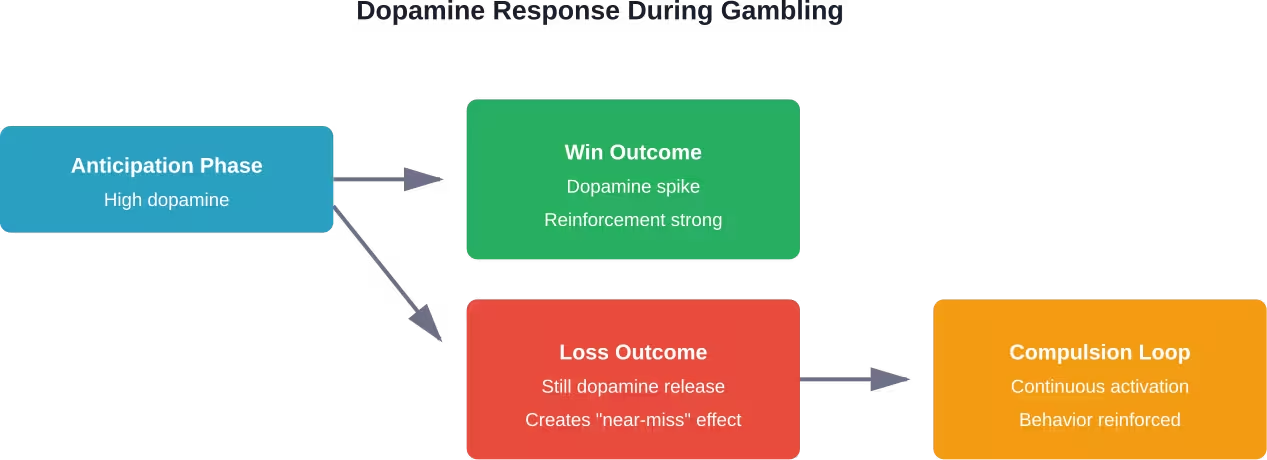
When someone gambles, the brain releases dopamine—a neurotransmitter that creates feelings of excitement and pleasure. Here’s the thing though: this neurological response doesn’t just occur during wins.
Your brain produces dopamine even when you lose.
Research from NIH’s behavioral neuroscience division demonstrates that the dopamine system responds intensely to reward uncertainty rather than reward itself. In studies involving both primates and humans, mesolimbic dopamine activation reached maximum levels when reward probability hovered around 50%—that sweet spot of unpredictability that keeps people engaged.
The Mayo Clinic notes that gambling can stimulate the brain’s reward system much like drugs or alcohol, leading to addiction. But gambling has a unique advantage over substance use: it doesn’t require ingesting anything. The behavior itself becomes the drug.
Uncertainty Is the Hook
Research published in the journal Frontiers in Behavioral Neuroscience reveals something counterintuitive: uncertainty amplifies addiction more than winning itself.
Studies show that reward probability reinforces dopaminergic activation and behavioral response. The sustained dopamine response toward uncertainty follows variance properties—it peaks at 50% reward probability, then decreases toward stimuli with more predictable outcomes.
This explains why slot machines and roulette wheels are particularly addictive. The unpredictability creates constant neurological engagement. Each spin represents possibility, and the brain interprets that possibility as potential reward—triggering dopamine regardless of actual outcome.
According to data from responsiblegambling.org, once the thrill of the moment takes over, the brain produces this neurological response even during losses. This phenomenon keeps individuals gambling long after rational decision-making would suggest stopping.
Why Some People Develop Gambling Disorder
Not everyone who gambles develops a problem. In fact, research indicates that 44% of British people gamble over an average four-week period, yet approximately 340,000 are considered at-risk, with a much smaller percentage meeting criteria for gambling disorder.
So what separates recreational gamblers from those with compulsive behavior?
Neurobiological Vulnerabilities
Research from the University of British Columbia’s Centre for Gambling Research demonstrates that individuals with gambling disorders show distinct patterns in reward processing. Brain imaging studies reveal altered activation in the mesocorticolimbic dopamine system—the same neural pathways involved in substance addictions.
Some people have genetic variations in dopamine receptor genes that influence susceptibility. While small subject numbers and lack of replication in larger studies point to the need for more research, early evidence suggests dopaminergic differences play a role in who develops gambling disorders.
Psychological and Environmental Factors
NIH research indicates several risk factors beyond neurobiology:
- History of substance use disorders (35-63% of pathological gamblers have lifetime substance use disorders)
- Mental health conditions, particularly mood disorders and ADHD
- Early exposure to gambling activities
- Social environment and peer influences
- Accessibility to gambling opportunities
The American Psychiatric Association recognizes gambling disorder as a behavioral addiction—the only one officially classified alongside substance use disorders in the DSM-5. This reclassification acknowledges the neurobiological similarities between gambling and drug addiction.
Behavioral Addiction | Lifetime Substance Use Disorder Rate |
|---|---|
Pathological Gambling | 35% – 63% |
Compulsive Sexual Behavior | 64% |
Kleptomania | 23% – 50% |
Internet Addiction | 38% |
Pathologic Skin Picking | 38% |
Which Types of Gambling Are Most Addictive?
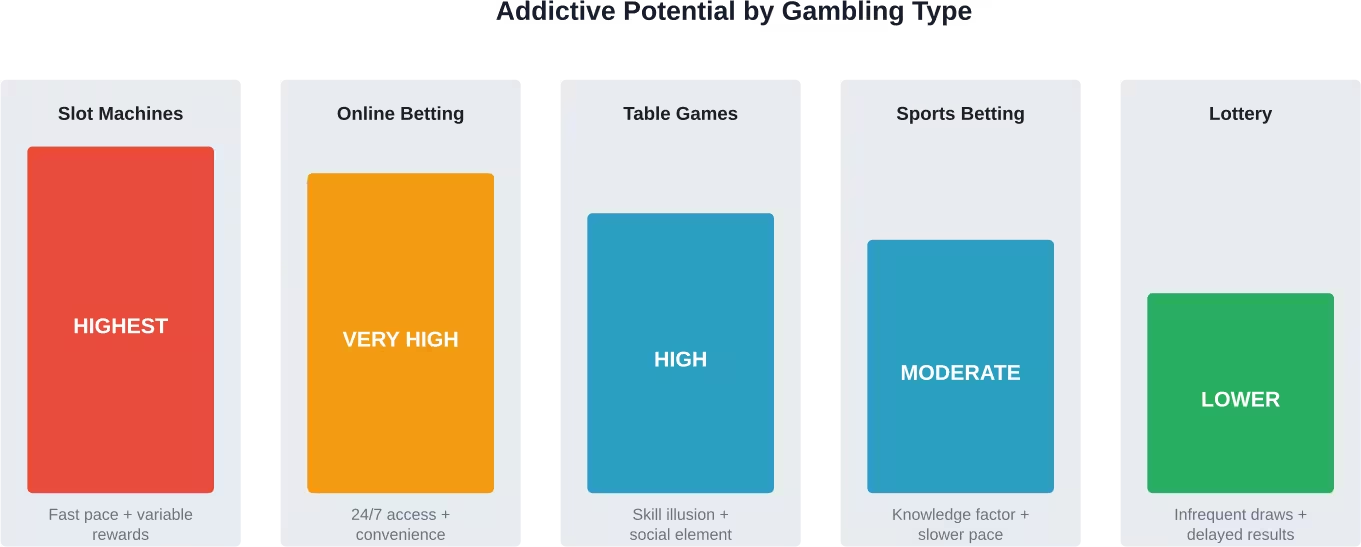
Not all gambling carries equal addictive potential. Games with rapid event frequency and the illusion of control tend to create stronger compulsive patterns.
Electronic gambling machines—particularly slot machines—rank among the most addictive forms. The fast pace, immediate feedback, and variable reward schedules create powerful reinforcement loops. Players can complete dozens of cycles per hour, each triggering dopamine responses.
Sports betting apps have introduced new concerns. The accessibility and constant availability mean gambling isn’t confined to casinos anymore. Real talk: when betting opportunities exist 24/7 in your pocket, barriers to compulsive behavior dissolve.
Table games like poker and blackjack involve skill elements that can create an illusion of control—the belief that strategy can overcome randomness. This cognitive distortion reinforces continued play despite mounting losses.
Find the Best iGaming Solutions in One Place

Understanding how gambling affects behavior is one side of the industry. The other is how companies choose the products and systems behind those experiences. Sologe is a B2B marketplace where operators look for platforms, software, and services, and vendors present their solutions in one place. It gives companies a structured way to explore options instead of relying on scattered sources.
Connect with the Right iGaming Partners Now
With Sologe, companies can:
- Find and compare suppliers based on real business needs
- Explore solutions used across online and land-based operations
- Stay visible to operators actively looking for new tools
- Start direct conversations without fragmented channels
If you want a clearer way to find partners or present your solution to the right companies, contact Sologe and start the conversation.
Recognizing the Signs of Gambling Disorder
The DSM-5 diagnostic criteria require at least four of nine symptoms within a 12-month period. Common signs include:
- Needing to gamble with increasing amounts to achieve desired excitement
- Restlessness or irritability when attempting to cut down gambling
- Repeated unsuccessful efforts to control or stop gambling
- Preoccupation with gambling (reliving past experiences, planning next venture)
- Gambling when feeling distressed
- Chasing losses—returning to recover money lost
- Lying to conceal extent of gambling involvement
- Jeopardizing relationships, jobs, or education due to gambling
- Relying on others for money to relieve desperate financial situations
Research from the National Research Council indicates that pathological gamblers often accumulate large debts—frequently in the tens of thousands of dollars. One study reported that 10 percent of 128 gamblers treated at outpatient clinics had debts exceeding $100,000.
Treatment Approaches and Recovery
Treatment for gambling disorder mirrors approaches used for substance addictions, with some modifications.
Cognitive-behavioral therapy addresses the thought patterns and beliefs that maintain gambling behavior. This includes challenging cognitive distortions like the gambler’s fallacy (believing past results influence future outcomes) and illusion of control.
Medications haven’t shown the same efficacy as in substance use disorders, though some evidence supports opioid antagonists like naltrexone. The dopamine system’s role suggests potential pharmaceutical targets, but more research is needed.
Gamblers Anonymous and peer support groups provide community and accountability. Many treatment programs combine individual therapy, group support, and family counseling to address the multiple dimensions of gambling disorder.
But here’s the challenge: access to specialized treatment remains limited. Pathological gambling receives insufficient research attention despite affecting as many people as autism and schizophrenia. The lack of national focus on treatment development creates gaps in available intervention services.
Frequently Asked Questions
Why do people get addicted to gambling if they lose money?
The brain releases dopamine during gambling regardless of winning or losing. Uncertainty itself activates the brain’s reward system, reinforcing the behavior even when outcomes are negative. Cognitive distortions, such as near-miss experiences, further strengthen the urge to continue.
Is gambling addiction as serious as drug addiction?
Yes. Research shows gambling disorder affects the same brain reward pathways as substance addictions. It is officially classified alongside substance use disorders due to these neurobiological similarities, and it often co-occurs with other addictions.
Can someone be genetically predisposed to gambling addiction?
Genetic factors may influence susceptibility, particularly through differences in dopamine-related genes. However, genetics alone do not determine outcomes—environment, mental health, and exposure also play major roles in overall risk.
What makes online gambling more addictive than casino gambling?
Online gambling offers constant access, convenience, and fast-paced play. The lack of physical limits and social observation allows for more frequent and prolonged sessions, increasing the risk of developing problematic behaviors.
Does winning make gambling more or less addictive?
Early wins can increase addiction risk by reinforcing the behavior. However, unpredictable rewards—not consistent wins—create the strongest psychological conditioning, making gambling particularly habit-forming.
How long does it take to develop a gambling addiction?
The timeline varies widely. Some individuals develop problematic habits within months, while others may gamble recreationally for years. Faster-paced games, especially electronic ones, can accelerate the development of addiction.
Can gambling addiction be cured completely?
Recovery is possible, but gambling disorder is generally treated as a long-term condition requiring ongoing management. Treatment focuses on maintaining control, preventing relapse, and building healthier coping mechanisms over time.
The Path Forward
Understanding why gambling is addictive requires acknowledging the complex interplay between neurobiology, psychology, and environment. The dopamine system’s response to uncertainty creates powerful reinforcement that transcends rational decision-making.
For some people, gambling remains harmless entertainment. For others, neurobiological vulnerabilities and risk factors converge to create a disorder that rivals substance addictions in severity and impact.
The research is clear: gambling disorder deserves recognition as a serious mental health condition requiring evidence-based treatment and prevention efforts. As accessibility expands through online platforms, understanding these mechanisms becomes increasingly critical.
If you or someone you know shows signs of gambling disorder, professional help is available. Organizations like the National Council on Problem Gambling provide resources, and treatment professionals can develop individualized intervention plans. Recognition is the first step toward recovery.
Related Articles

September 30, 2026Is Sports Betting Legal in Brazil? The Full...

September 30, 2026Is Sports Betting Legal in Iran? The Real...